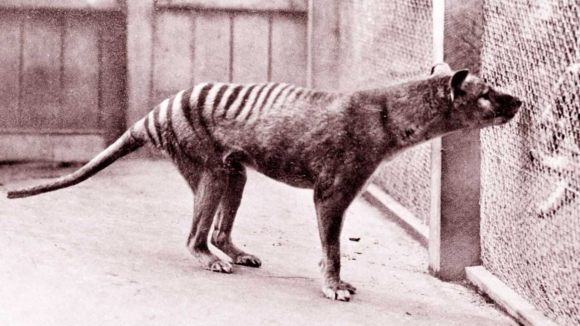
Oceania is a continent that is described as having a beautiful landscape as well as a plethora of endemic species. While that is correct, the population of species that have been placed on the endangered species list or have gone extinct all together is alarmingly large. In project 1 we discussed the landscape in Australia that has made it such a desirable home for so many species as well as the history of the continent in terms of European colonization. Europeans came into Australia and took over, meaning that indigenous people and plants/animals were threatened by new ideas and species that were introduced and integrated. This is believed to be the main reason that extinction began to occur in Oceania. With that being said, since then, over 100 species have ultimately gone extinct creating a very high extinction rate for the continent; it also has the highest vertebrate mammal extinction rate in the world. Another argument that people propose to explain the reasons for large-scale extinction are invasive species. In a journal titled Pacific Conservation Biology 25, researchers found that 1,257 of the endangered species found in Australia are directly affected by an invasive species; 207 invasive plants, 57 animals and 3 pathogens. This goes to say that 267 species have been able to change the growth pattern of over 1000 species which is important to note. Invasive species are able to come in and essentially disrupt the way of living of many if not all of the surrounding species. Because of their impact, invasive species are said to be one of the biggest threats to endemic species in Australia. This is due to the fact that once these species die out, they will never be seen again in the world. Moving on to how extinction affects the people and environment in Australia, we first see the issue that in order to reduce extinction, Australia would need to remove invasive species. This is extremely costly and much of that cost would fall on the farmers or citizens of Australia in general. This brings about the idea that citizens and more specifically farmers are major stakeholders in the ever-growing extinction rates. Likewise, the cost of preserving wildlife is a major issue in the government. In order for organizations to survive, they need to receive funding from the government meaning they, too, are stakeholders. The government has to find the best ways to allocate money accordingly as well as finding the best organizations to fund; wildlife organizations being included. Wildlife organizations are also a stakeholder in the extinction rates in Australia because if the list of endangered species continues to rise, these organizations will struggle to afford the resources they need to continue running at their best. On the other hand, these organizations need endangered species to still be prevalent if they are going to stay in business meaning that this stakeholder can be looked at from a few different angles. The last stakeholder we are choosing to discuss is celebrities and the way that they as well as the media have an effect on the way the rest of the world perceives Australian wildlife. These stakeholders all play a large roll in the future of wildlife in Australia and they are important to recognize.
Author: ant225cj
Stakeholders
Celebrities
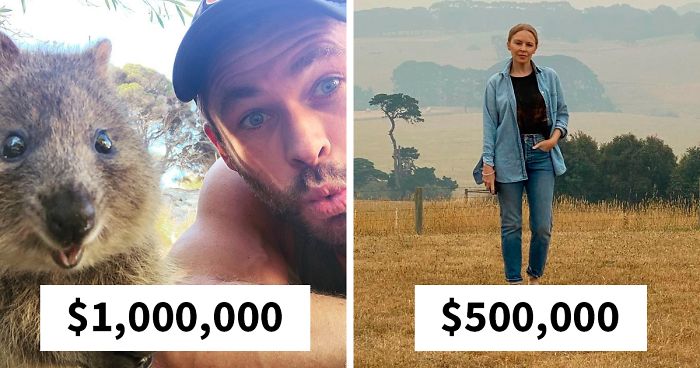
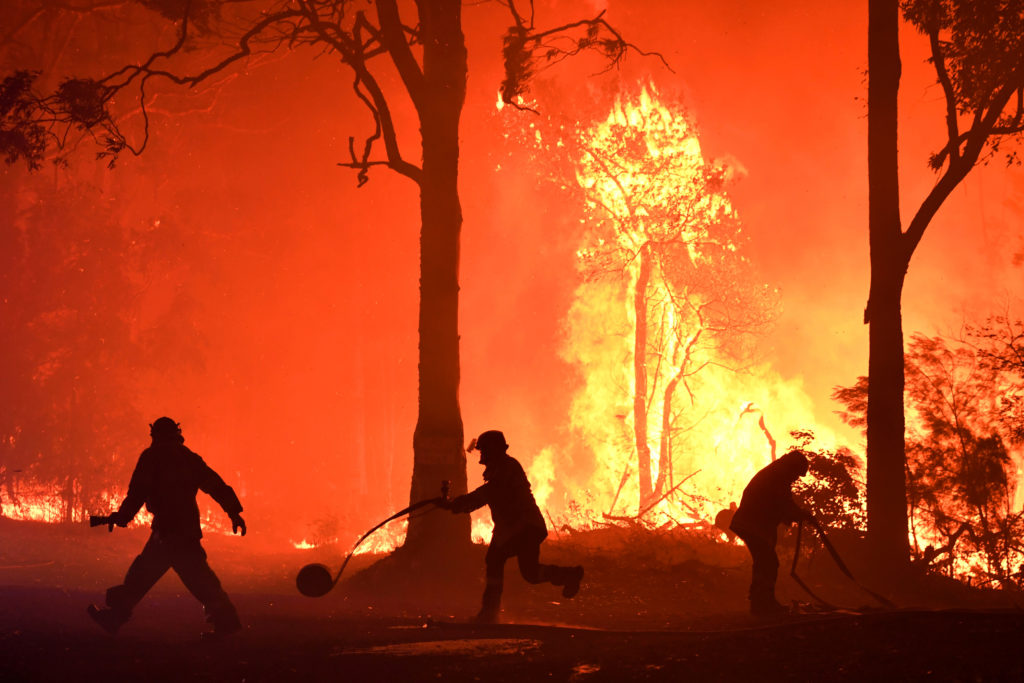
Some of the biggest stakeholders in the Australian wildfire deforestation are celebrities. During the peak of the fires, celebrities took to social media to share what was happening in Australia. Some celebrities created petitions and shared their views on the crisis. By doing this, they made their fans and followers more aware of what was happening in Australia. This helped increase awareness and raise more money through their fans and followers. Celebrities also donated millions of dollars to help the restoration efforts. Some celebrities may have spoken out due to their views or beliefs. Other celebrities may have spoken out to keep a philanthropic reputation. No matter their motivation to speak out, celebrities have benefitted from doing so. The biggest way celebrities helped the situation was by making others aware. They have a large and influenceable audience. When celebrities spoke out about the issues, more people started to listen and care. Celebrities had a large positive influence on the wildfire deforestation in Australia.

Government
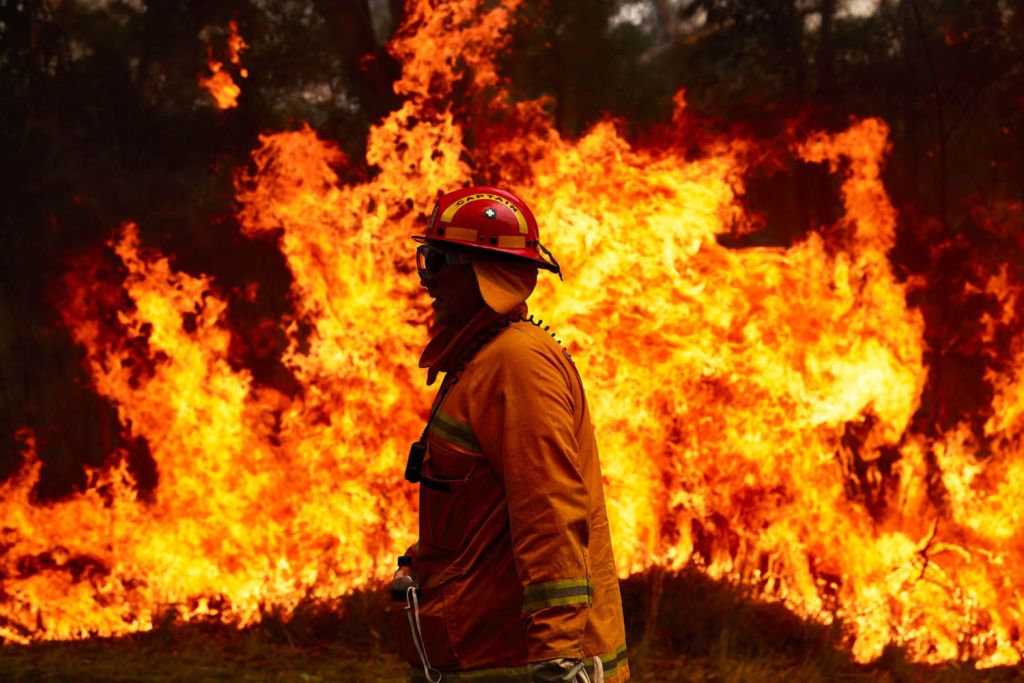
One of the biggest stakeholders in the Australian wildfire deforestation was the Australian government. The government had one of the biggest influences during the crisis through their ability to make laws. The Australian government was proactive and reactive regarding the deforestation. There were laws and restrictions in place before the wildfire deforestation took place. For example, the Australian government put restrictions on logging, which is bad for trees and forests. Another example of how the Australian government has been proactive is by planting new trees. The government has been reactive, but they have also been proactive. When the wildfire deforestation first started, they deployed firefighters to try and slow the spread of the fires. The Australian government is negatively influence by the fires. They are forced to give money to the deforestation efforts and could face criticism if the forests do not recover. Overall, the government has helped the deforestation efforts.

https://e360.yale.edu/features/long-shaped-by-fire-australia-enters-a-perilous-new-era
Citizens
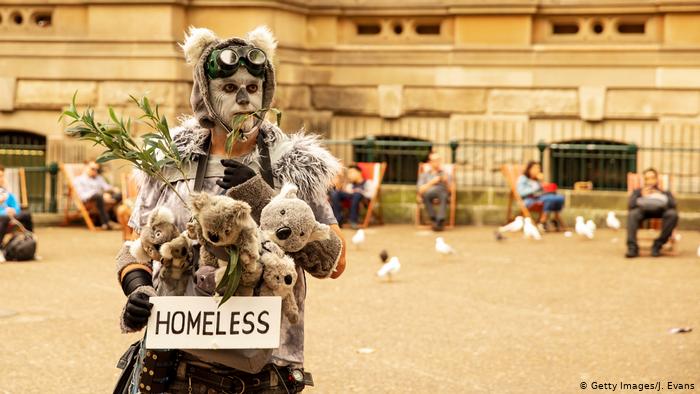
There are numerous different ways that we see citizens being stakeholders in Australian wildlife conservation. For starters, I want to mention farmers and how extinction, in a way, affects their business. A large issue in Australia are invasive species and the threat they pose to agriculture. In order for farmers to eliminate invasive species, it would cost approximately $13.6 billion dollars which is not something that many can afford(Wight 2018). With that being said in order for them to protect endemic species in the process would cost double that. Likewise, other citizens are also stakeholders because they obviously do not want to see the flora and fauna of the area be diminished because of things like wildfires or deforestation. With that being said there have been numerous protests by civilians following the massive wildfires in Australia because it is destroying the diverse and unique ecosystem, but the government didn’t seem to be working fast enough to stop them. People who live on the continent are seeking to preserve the land as well as decrease extinction rates because once many of the species they have grown to love die off, they will never see them again which fuels a bit of panic in the hearts of people who want to see the physical environment thrive.

Image taken from ‘Australia: Sydney protests as fires trigger health risks’; https://www.dw.com/en/australia-sydney-protests-as-fires-trigger-health-risks/a-51617414
Wildlife Reserves
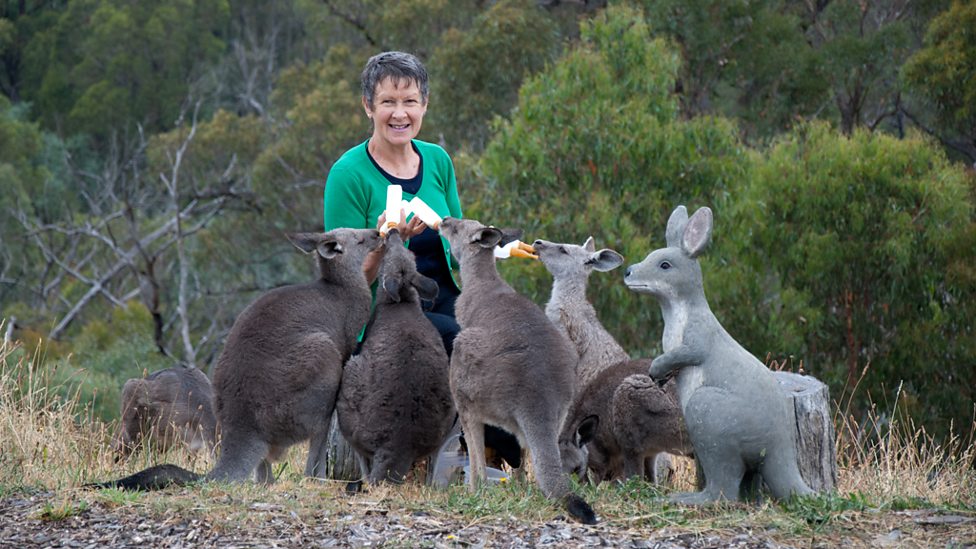
Wildlife Reserves are a very obvious stakeholder in the extinction of Australian species, but it is one that should be mentioned nonetheless. These organizations are in place in attempt to decrease the rate at which species are going extinct. On one side, we see that as the endangered species list increases, organizations are going to most likely need more funding in order to stay afloat. Especially after the wildfires, reserves are struggling to find the resources needed to rebuild sanctuaries. On the other side of sanctuaries, they are seen as stakeholders because, as bad as this sounds, the existence of endangered species creates jobs for a lot of people. In all reality, endangered species have become as good as gold. Wildlife reserves are forced to keep close watch on their animals because poaching of endangered species is a real issue in the world. Animals are put into reserves and sanctuaries in order to minimize the likelihood of extinction but in some cases, it just turns them into sitting ducks waiting to be hunted which is why wildlife reserves are such a large stakeholder. These organizations are trying to find new ways to improve the world in terms of the flora and fauna within it.

Scholarly Views
#1
One Scholarly article focused on the role that climate change has in plant and animal extinction in Australia. The article mentioned that it is obvious that animal extinction is one of the biggest problems in Australia at the moment. Although plant and animal extinction is occurring, the article showed that the long term effects of these extinctions were still unknown. The article mentioned how species extinction was mainly caused by the spatial distribution of water sources. These water sources were very dependent on the climate, therefore causing the species extinction to be strongly impacted by the climate. The author’s main views are that climate plays a very large role in plant and animal species extinction. The article does a good job of explaining how climate change has a large influence over plant and animal extinction. The article also does a good job of sharing how much is still unknown about the long term effects of climate change induced plant and animal extinction. Although the article only mentioned how climate dependent water sources play a large role in species extinction, the would likely also think that climate change played a large role in the recent deforestation. The authors of this article would also probably say that much is still unknown about the long term effects of the recent wild fire deforestation. (Saltré, et al.). Jordan Holt
#2
A scholarly article that outlined the causes of climate change in todays world questioned why some populations, even when protected, are more prone to extinction that other species. In the article, there are four forces that come together to ultimately aid in extinction; those being demographic stochasticity, genetic deterioration, social dysfunction, and extrinsic forces (Simberloff p. 259). This is presented followed by the statement that humans are the ultimate cause of modern day extinction. Likewise, there are no documented extinction cases in which humans did not have a hand of some kind. Throughout the article, he speaks about how, while humans do play a role in extinction, they are not the only cause. The idea that population size plays a role in survival rates is brought up because there were extinctions happening long before humans inhabited the land thus meaning that there are forces outside of human that play a role. He also speaks about the fact that based on a species’ immunity and genetics, their likelihood of survival could be affected. This is due to the phenomenon known as survival of the fittest that we constantly hear about in biology classes. Another force that is discussed is social dysfunction which means that if a species is unable to interact in a cohesive way within their own population as well as outside, their likelihood of survival decreases as well. The last reason that is given for possible extinction given by Simberloff is that forces outside of visible ones most likely play a role. This is seen today through climate change and natural disasters that are constantly putting species at risk. It is important to note that most, while not all, of these forces are either directly or indirectly affected by human actions. This article is a good look into the idea that while humans are largely to blame for growing extinction rates, there are some other variables that should be examined before blame is completely placed. Casey O’Connell
#3
One scholarly article focused on how one particular species is effected by the bush fires. The article focused on Koalas and how they were losing their habitats and their lives at a rapid rate. The article also briefly mentioned and compared how humans were effected. There were a lot of similarities between the losses that koalas faced and the losses that humans faced. One example of these similarities is how both species are being harmed currently though the bush fires, but experts were unsure of the long term health effects that these species would face. Some experts say breathing in the smoke from these bush fires could decrease lung size permanently in both species. A decrease in lung size can lead to more lung related problems later in life. The article also compares the habitat loss of the two species. Humans are losing their homes. Koalas are losing their trees. The article also mentions how climate change has exacerbated the bush fires even more, and potentially even caused them. The article does a good job of arguing the severity of the bush fires through different studies. By comparing koalas to humans, it makes more people care about the bush fire situation. (Pei, Y. Et al, 2020). Jordan Holt
References
Saltré, F., Chadoeuf, J., Peters, K.J. et al. Climate-human interaction associated with southeast Australian megafauna extinction patterns.Nat Commun 10, 5311 (2019). https://doi.org/10.1038/s41467-019-13277-0
Frayer, Janis Mackey, et al. “Australian Sanctuary Fights to Save Surviving Animals amid Catastrophic Wildfires.” NBCNews.com, NBCUniversal News Group, 15 Jan. 2020, http://www.nbcnews.com/news/world/australian-sanctuary-fights-save-surviving-animals-amid-catastrophic-wildfires-n1114986.
Wight, Andrew. “Australia Plays Key Role in Global Biodiversity Policy.” The Sydney Morning Herald, The Sydney Morning Herald, 24 Mar. 2018, http://www.smh.com.au/world/south-america/australia-plays-key-role-in-global-biodiversity-policy-20180323-p4z5zt.html.
Díaz, Sandra. “Summary for Policymakers of the Global Assessment Report on Biodiversity and Ecosystem Services of the Intergovernmental Science-Policy Platform on Biodiversity and Ecosystem Services.” 6 May 2019, https://ipbes.net/sites/default/files/downloads/spm_unedited_advance_for_posting_htn.pdf.
Pei, Y., Xu, R., Abramson, M. Et al. Bushfires in Australia: a serious health emergency under climate change (2020). https://doi.org/10.1016/S2542-5196(19)30267-0
During the year 1788 in Australia, 100 different species were found on the continent that no longer reside there. In other words, 100 plant and animal species have gone extinct since the year 1788. This data is concerning, considering other continents experienced lower extinction rates than Australia during the same time periods. Many researchers believe this extinction period started around the time that Europeans colonized Australia. The Europeans caused the population to grow, therefore putting a greater strain on resources. This change in the environment was likely the largest cause of plant and animal extinction. Although many species have gone extinct in the past on all continents, Australia is still struggling with extinction of plant and animal species today in a real way. (“Scientists Re-Counted Australia’s Extinct Species” 2020).

Landscape and Ecology
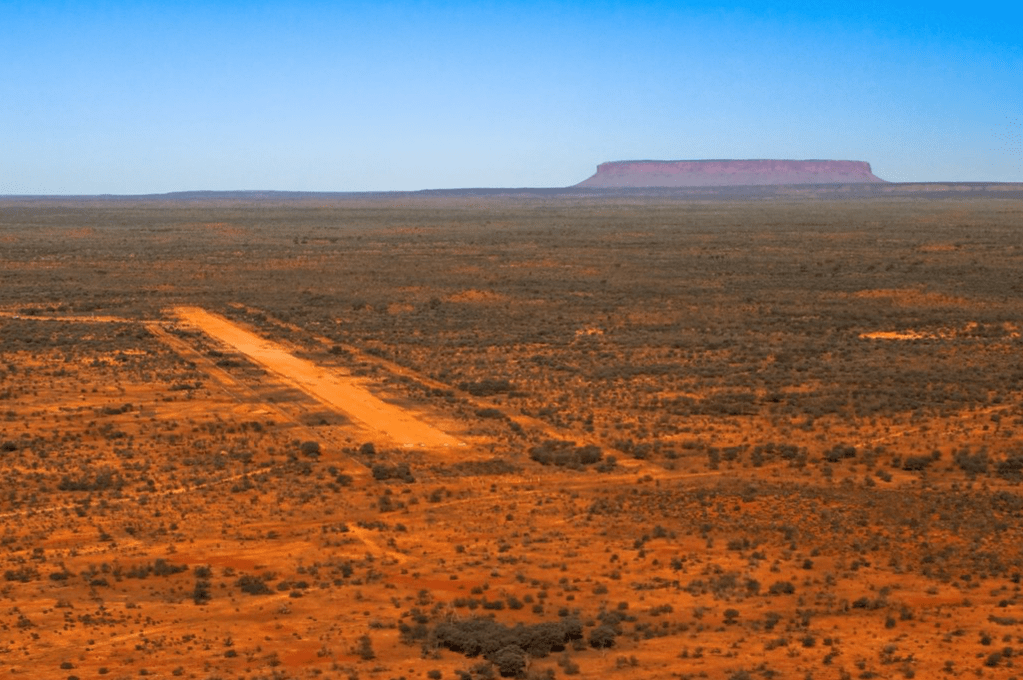
Australia or Oceania is said to be a continent that is extremely diverse. It is the lowest, flattest and smallest landmass on Earth. The land is on top of a tectonic plate thus meaning that there are currently no active volcanoes. The terrain is described as having low desert plateaus, the largest coral reef in the world, and some mountainous land. The climatic zones in Australia are tropical rainforests, deserts, cool temperate forests, and snow covered mountains (Digital Transformation Agency 2015).
Due to the climate and location of the continent, plants and animals have been forced to evolve in an isolated environment. Australia is a continent with quite a few different indigenous marsupial species. Likewise, it is one of the only places that you will find either a platypus or an echidna (egg laying mammals). Also due to the fact that the continent is isolated, many of the species there are endemic to Australia. It is estimated that 10% of the Earth’s species reside in Australia thus making its ecology megadiverse (Hobbs 2005).
References
1. Digital Transformation Agency. “The Australian Continent.” Australia.gov.au, Digital Transformation Agency, 12 May 2015, http://www.australia.gov.au/about-australia/our-country/the-australian-continent.
2. Hobbs, Richard J. “Landscapes, Ecology and Wildlife Management in Highly Modified Environments – an Australian Perspective.” CSIRO PUBLISHING, CSIRO PUBLISHING, 9 Aug. 2005, http://www.publish.csiro.au/wr/wr03037.
3. Lohan, Tara. “Australia’s Bushfires: An Extinction Crisis Decades in the Making • The Revelator.” The Revelator, February 10, 2020. https://therevelator.org/australia-bushfires-extinction/.
4. Oh, Rebecca. “How to Help the Victims of Australia’s Wildfires.” PBS. Public Broadcasting Service, January 6, 2020. https://www.pbs.org/newshour/world/agents-for-change/how-to-help-the-victims-of-australias-wildfires.
5. “Scientists Re-Counted Australia’s Extinct Species. And the Result Is Devastating.” LiveScience. Purch. Accessed February 19, 2020. https://www.livescience.com/australia-extinct-species-devastating.html.
Current Problems
Australia has struggled with extinction rates in the past and it is still a problem today. Due to Australias location, it has a unique geography and many unique species. According to experts, 80% of the plant and animal species found in Australia are found no where else. These factors all fuel the extinction crisis that Australia is currently experiencing. Wildfires have also been infamously in the news recently. These fires are one of the biggest contributors to species loss. Experts estimate that around 1 billion animals have been killed due to these fires. More species are going to continue to go extinct if things do not change (Lohan 2020).